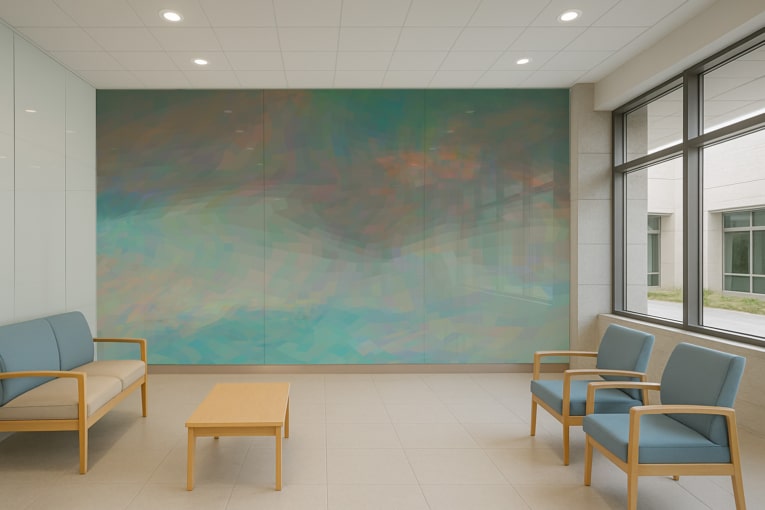
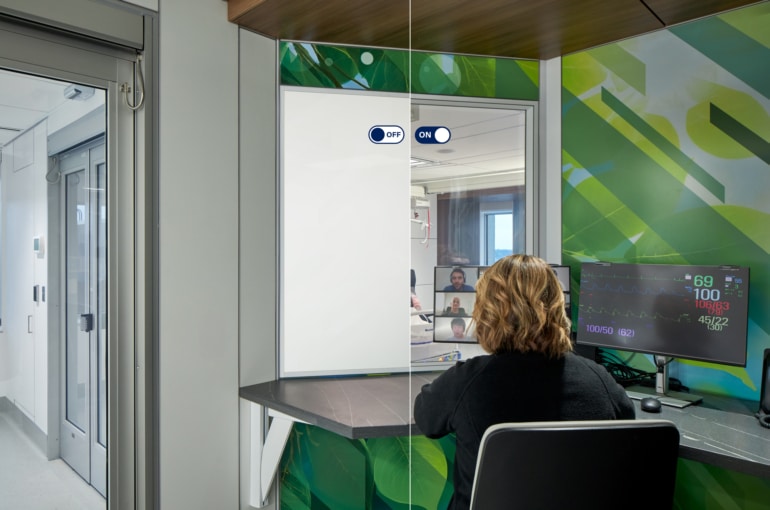
Public art has long been treated as something applied. A mural painted onto a wall. A graphic adhered to a surface. A sculpture placed in a plaza.
In contemporary civic architecture, that approach is shifting.
Instead of attaching art to buildings, designers are embedding art into the architecture itself. Decorative glass, particularly digitally printed architectural glass, is redefining how public art functions, performs, and endures in the built environment.
The result is not just decoration. It is infrastructure with meaning.
The Limits of Surface-Based Public Art
Traditional murals and vinyl applications can be powerful. They tell stories. They celebrate culture.
They are also temporary.
Paint fades. Films peel. Adhesives degrade. In high-traffic transit hubs, hospitals, schools, and civic buildings, maintenance cycles shorten and budgets tighten.
Public institutions invest in art to express identity and resilience. Yet too often, the materials chosen cannot match the longevity of the architecture they sit on.
From Canvas to Construction Material
Decorative glass changes the equation because it is not an applied layer. It is part of the glazing system.
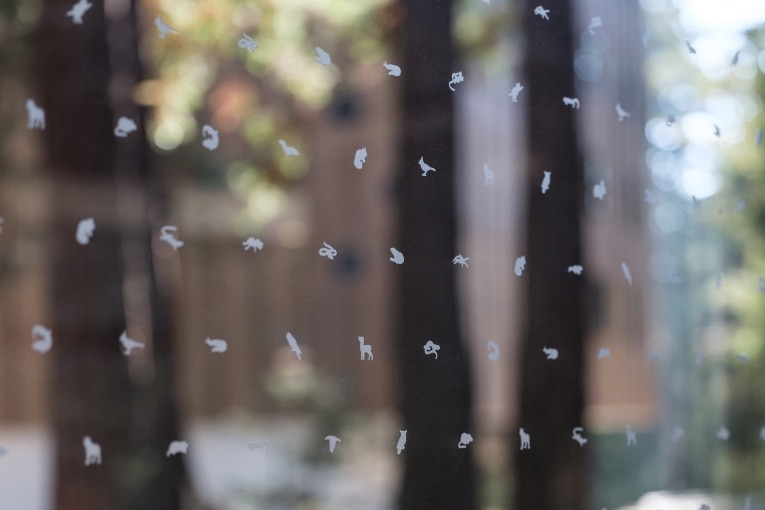
In the digital print process, imagery, patterns, and gradients are fused directly into the glass during the tempering process. In the Eco-etch process, a fine grit aluminum oxide abrades the surface of the glass, creating a design that diffuses light and carries a lifetime warranty for interior or exterior use.
In either process, your design is permanently fused with the glass. It does not sit on the surface. It becomes inseparable from the material itself.
Learn More about Digital Print
 Shown above: Eco-etched exterior glass windows for the Harry Ransom Center, University of Texas at Austin. Fabricated by Skyline. Design by Lake|Flato. Photo by Hester + Hardaway.
From Canvas to Construction Material
What makes decorative glass uniquely suited for public art is not just durability and beauty. It is performance.
Architectural glass can be engineered to meet:
- Safety glazing standards
- Laminated impact requirements
- Bird-friendly criteria
- Acoustic needs
- Energy efficiency benchmarks
Public art created in glass can contribute to shading strategies, daylight modulation, and privacy gradients while carrying narrative, imagery, or cultural symbolism.
Light as a Design Medium
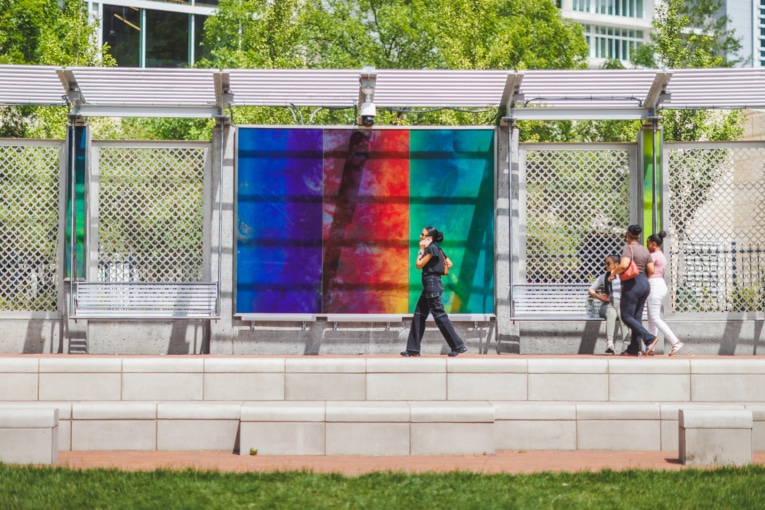
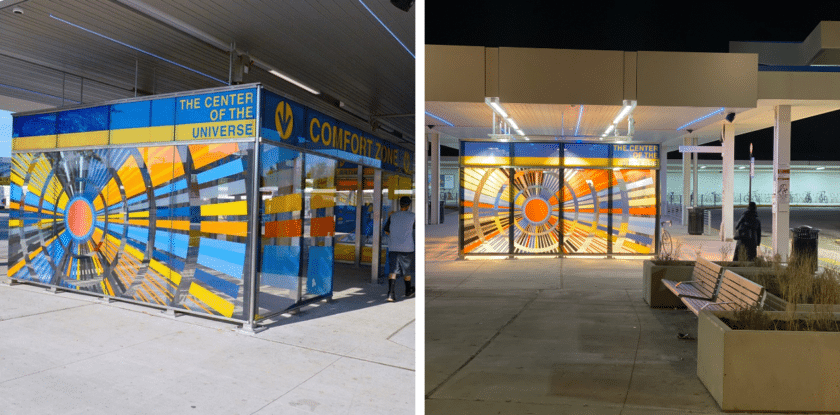 Shown above: Custom digitally printed glass windbreak panels at the Jefferson Park Transit Center. Fabricated by Skyline. Public art installation Center of the Universe by Jamie Pawlus.
One of the most compelling reasons decorative glass is transforming public art is its relationship to light.
Glass is not static. It shifts throughout the day.
In the morning, sunlight filters through printed gradients. At midday, opacity patterns modulate glare. Etched glass using our Eco-etch® techniques allow designers to introduce pattern and privacy gradients by permanently altering the glass surface, diffusing light while preserving openness.
Unlike matte murals, decorative glass participates in its environment. It reflects, transmits, diffuses, and transforms.
This dynamic quality is especially powerful in civic settings such as transportation hubs, healthcare campuses, and cultural institutions where buildings operate nearly around the clock.
Sustainability and Material Responsibility
Material selection in public projects carries weight beyond aesthetics.
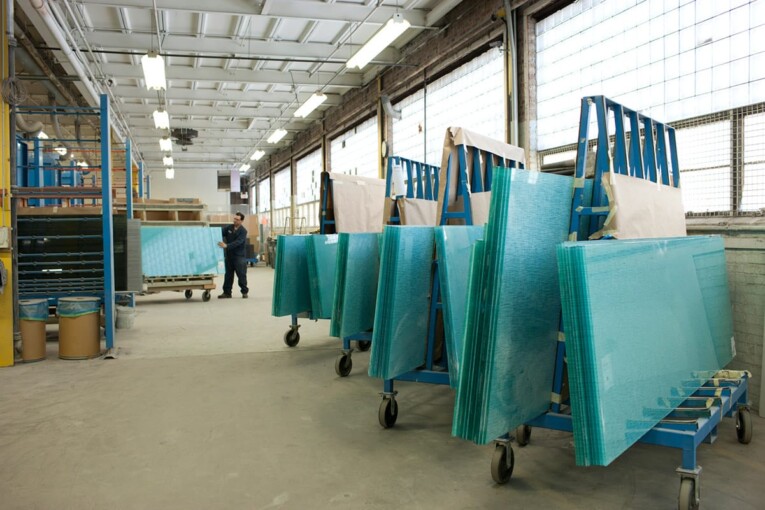
Glass is chemically inert, a zero emitter, and infinitely recyclable. It does not off-gas, peel, or degrade the way many composite materials do. At Skyline, decorative glass is fabricated domestically using Red List Free, Cradle-to-Cradle Certified base glass.
Process matters as much as material. All decoration takes place in our Chicago facility, where water from production is recycled, air quality is monitored, and high-efficiency equipment reduces energy use.
Decorative techniques are designed with the same intent. Digital printing uses ceramic frit inks free from heavy metals. Eco-etch is a chemical-free surface treatment. Laminated assemblies utilize EVA interlayers manufactured without Red List materials. When specified thoughtfully, decorative glass supports durability, daylighting, and long-term building performance.
Sustainability is not an add-on. It is embedded in how the material is made.
View Skyline’s Commitment to Sustainability
Light as a Design Medium
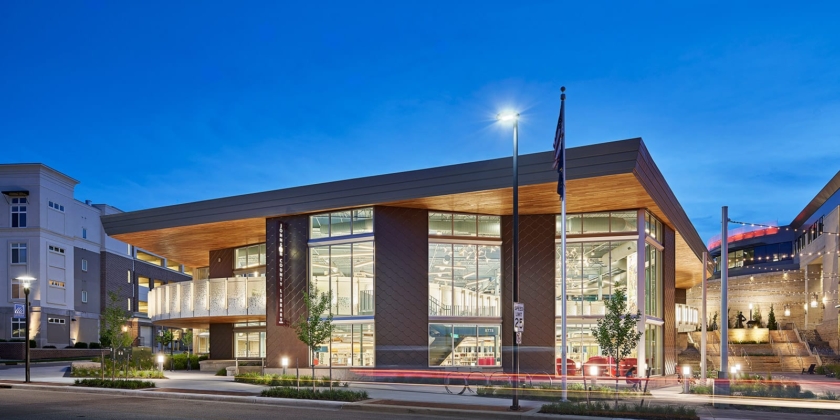
Shown above: Digitally Printed exterior glass and railings at Lenexa Library , City Center. Fabricated by Skyline.
Design by Holzman Moss Bottino Architects. Photos by Chris Cooper.
As architects and civic planners rethink how buildings serve communities, materials matter.
Public art must:
- Meet code and safety requirements
- Support sustainability goals
- Withstand maintenance realities
- Interact with light and movement
- Express cultural identity
Decorative glass meets all of these demands simultaneously. Beyond murals and surface graphics, decorative architectural glass represents a new category of public art where beauty and performance operate together.
For over forty years, Skyline has transformed glass into permanent, high-performance design-forward installations for healthcare, transit, education, and civic spaces across North America. Our work is not applied to buildings. It becomes part of them.
Stay in the Glass Loop
Get the latest Skyline news and product info delivered to your inbox.